
Upcoming Events.
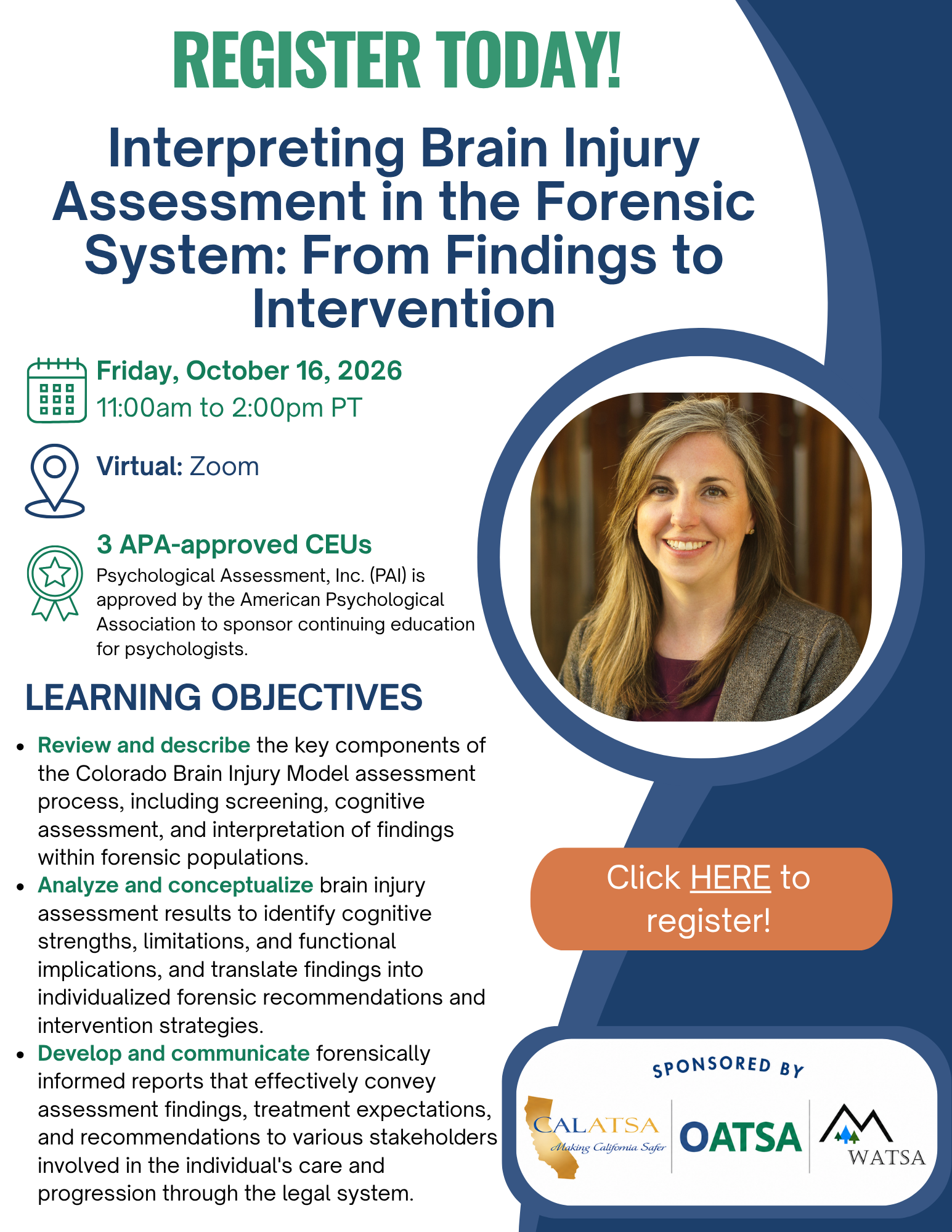
Interpreting Brain Injury Assessment in the Forensic System: From Findings to Intervention
This three-hour training will focus on the interpretation and application of brain injury assessment findings within forensic settings. The first hour will provide a concise review of the Colorado Brain Injury Model and the assessment process, including screening procedures, cognitive assessment components, and the identification of cognitive strengths and weaknesses relevant to justice-involved individuals. The remainder of the training will focus on case conceptualization, translating assessment findings into clear and actionable forensic reports, and developing individualized recommendations that support competency-related services, legal system navigation, rehabilitation, and community reintegration. Through case examples, participants will explore realistic treatment expectations, intervention planning, and practical strategies for communicating brain injury-related findings to courts, legal professionals, treatment providers, and other stakeholders.
WATSA 2026 Retreat
WATSA Retreat 2026
WATSA will be gathering in person once again for a day of connection and learning. Join us for a discussion on the following topics:
Chaperone Training with Michael O’Connell - what SOTP’s need to know, including in the contexts of SVPs and LRAs
DOC Perspectives on Chaperones with Dominic Winter
Contracting with Government Agencies
A panel discussion on AI Ethics in Practice
More TBA!
Lunch will be provided. Please share any dietary restrictions when registering.
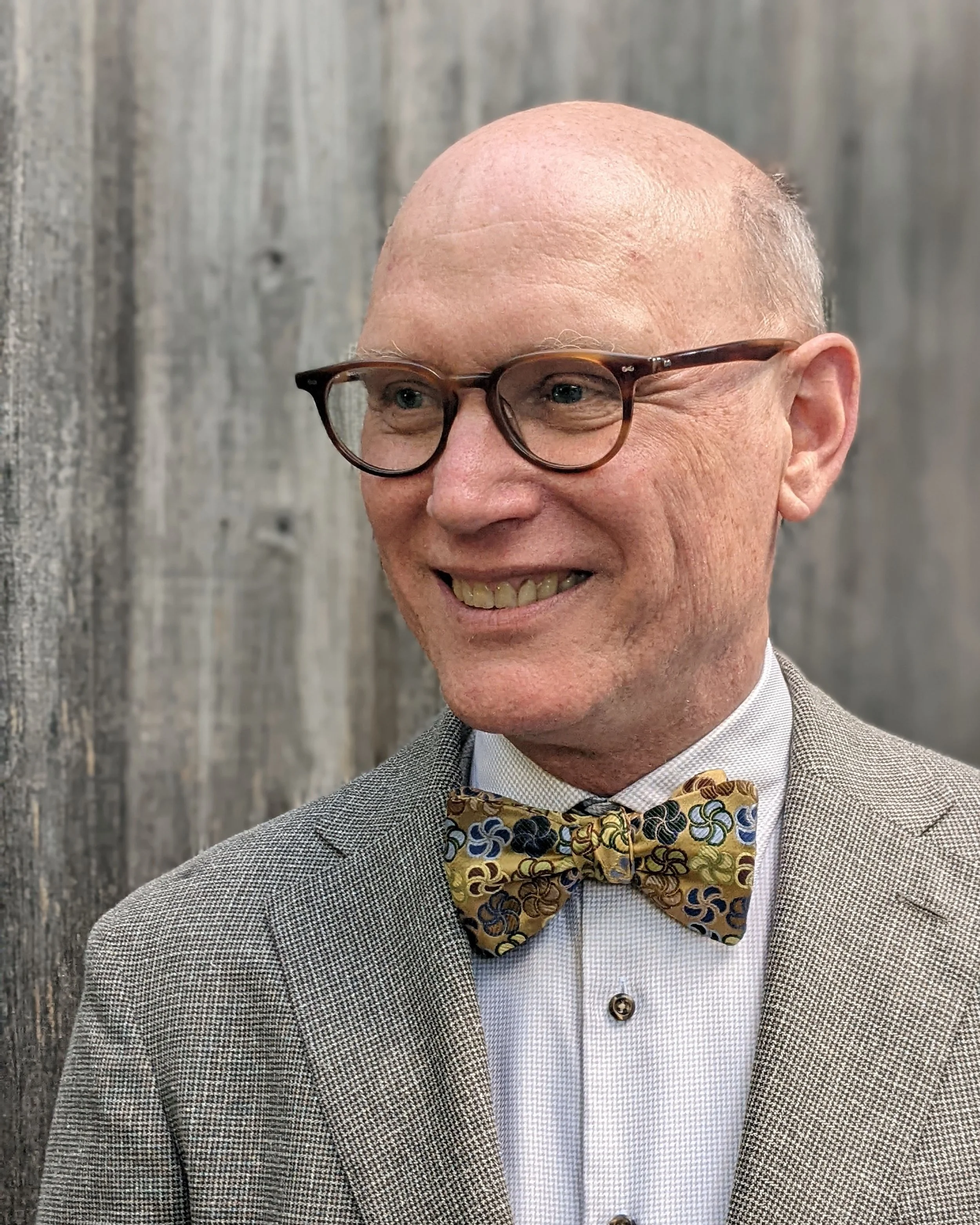
Karl Hanson - using evidence to improve sexual recidivism treatment
Karl Hanson: Using Evidence to Improve Sexual Recidivism Treatment
Just because an intervention appears effective, that doesn’t make it so. The history of medicine is full of widely accepted interventions that were actually harmful. During my professional career, I have witnessed the rise and fall of many approaches to sexual recidivism treatment. Most of these changes have been motivated by niggling dissatisfactions with current practice combined with compelling arguments for innovative approaches. Research has played a limited role in these changes. This is understandable. The delay between treatment completion and sexual recidivism makes strong evaluations prohibitively expensive. Public attitudes limit the funding that is available to “improve treatment for sexual offenders”.
In this presentation I review what the available research evidence can contribute to the design of psychological interventions for persons with a history of sexual offending. In particular, I discuss the relative stability of personality and community adjustment, predictable changes of development during adulthood and advance age, empirically validated risk and protective factors for sexual recidivism, and changes in dynamic risk factors. I conclude by an appeal to treatment providers to adopt the practice of continuous evaluation, and to document their successes (and failures) in a way that contributes to cumulative knowledge.
WATSA + KCSARC Annual Joint Meeting
Update on Assessment and treatment for Children with Problem Sexual Behavior with Lucy Berliner, LICSW
Professional Wills
Professional Wills
Join estate planning and administration attorney Tasha Lyn Cosimo of Betts Patterson Mines, PS, licensed in Oregon and Washington, for a practical two-part webinar designed specifically for members of the Washington Association for the Treatment and Prevention of Sexual Abuse. This program combines essential estate planning education with targeted guidance for licensed mental and behavioral health professionals in Washington and is tailored to address both personal planning needs and professional practice responsibilities.
PNW Regional conference
PNW Regional Conference
The 2nd annual joint conference for the Pacific Northwest, this year presented in a hybrid format.
Traditional Masculinity, Social Media, and the Future of Violent Extremism
Traditional Masculinity, Social Media, and the Future of Violent Extremism
Traditional masculinity is becoming a major force in the future of violent extremism. While race remains central, masculinity—centered on control, dominance, and discipline—is just as influential. Gender and race work side by side to reinforce rigid hierarchies and offer a sense of order, identity, and purpose. Understanding how traditional masculinity functions in extremist spaces is key to seeing where violent extremism is heading—and why it remains so effective in pulling people in.
Violence Risk Scale- Sex Offender Version (VRS-SO)
Violence Risk Scale- Sex Offender Version (VRS-SO)
The VRS-SO consists of a static risk measure, and a dynamic measure. The dynamic measure can also be used with the Static-99R. The advantages of the VRS-SO include its ability to measure changes in sexual reoffense recidivism as a function of treatment change and the static, dynamic, and change scores being mathematically integrated to provide a more precise estimate of risk. The current norms (N = 913) and Excel-based calculator demonstrate good relative predictive validity, and each of the three scores make a unique contribution in the prediction of risk (i.e., incremental; validity; Olver et al., 2018). This one-day workshop will provide an overview of the development, relevant research, administration, scoring, and interpretation of the VRS- SO. Participants will have an opportunity to code the VRS-SO on one sample case to assess risk, identify treatment targets linked to sexual violence, and evaluate treatment changes. This workshop will be suitable to all who provide clinical/risk assessment, treatment, and risk management services to adults who were charged or convicted of sexual offenses, and to all who are interested in assessing change in treatment.